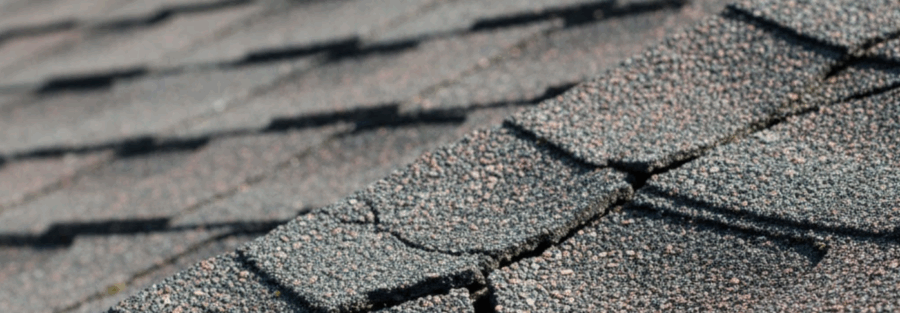
Knowing how to repair roof cracks starts with understanding why acting early matters. Even small surface splits or hairline fractures can let water in, compromise your decking, and void warranties if not handled properly. In North Texas, the combination of intense sun, hail, and fast temperature changes can turn a minor blemish into a major leak overnight.
At Alpine Roofing, we approach every roof issue methodically so our clients know what to expect and when to call for help. We never encourage DIY roof work because the safety risks and warranty implications are serious, but understanding the process helps homeowners protect their investment and make informed decisions. If you’d like a trained eye on your roof, our team offers prompt inspections and professional repairs throughout DFW.
Safety and Initial Assessment
Before any repair begins, safety is non-negotiable. We start on the ground by noting roof pitch, access points, and weather conditions to ensure our crews can work securely. Every technician uses full fall protection, harnesses, and footwear designed for grip and balance. Fragile surfaces like slate or tile are handled with special care to prevent further cracking or breakage.
Once safety is confirmed, we assess for signs of active leaks. Inside the home, we look for water stains on ceilings, damp insulation, and musty odors that suggest moisture intrusion. On the roof, we trace possible water paths from ridges, valleys, and penetrations, since water rarely shows up directly beneath the entry point. Tools like moisture meters and infrared scanners help us locate trapped moisture without disturbing the roof’s structure.
Diagnosing Crack Severity
Not all cracks are created equal. A small surface check on a shingle is very different from a full split through tile or a seam failure on a flat membrane. We document the location, length, and condition of each crack and determine whether it’s static or growing due to thermal movement. If the decking feels soft or fasteners are rusted, we extend the inspection to ensure there’s no hidden damage.
If you’re ready for a professional inspection, explore our roofing services for full evaluations or contact us to schedule an appointment in DFW.
Exploring Roof Type and Material Behavior
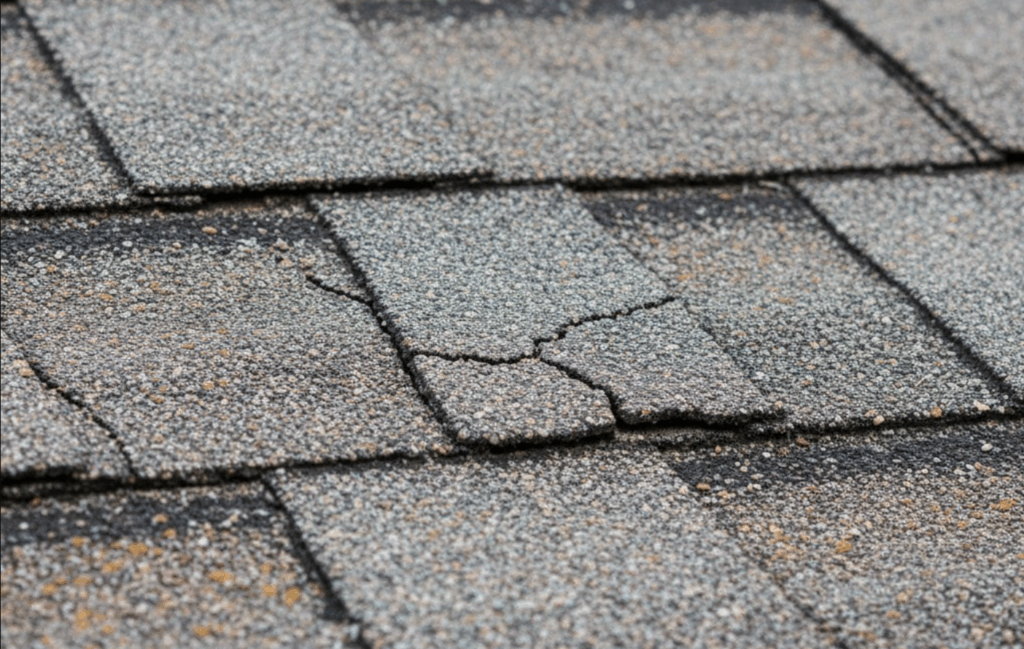
Each roof type reacts differently to stress, expansion, and weather exposure. Asphalt shingles may develop blisters or edge cracks from heat, while tile and slate roofs tend to suffer fractures from hail or foot traffic. Flat roofs such as TPO, EPDM, or modified bitumen may show signs of seam separation or shrinkage cracks that spread when ponding occurs. Metal systems, on the other hand, often develop stress cracks near fasteners or penetrations as panels expand and contract with temperature shifts.
Knowing whether the crack is cosmetic or structural is essential. Cosmetic cracks are usually superficial and don’t create a water path. Structural cracks penetrate through the material, form along seams, or intersect with fasteners, allowing moisture to enter and spread. If you’re unsure what type of crack you’re dealing with, it’s best to schedule a professional roof assessment to avoid costly mistakes.
Professional Repair Techniques
Every roof system requires a tailored approach. For asphalt shingles, we typically remove the damaged section, inspect the underlayment, and install new shingles with proper nail placement and seal strips. When only minor surface cracks are present and the surrounding shingles remain sound, we may use manufacturer-approved adhesives for reinforcement, ensuring performance isn’t compromised.
Flat roofs are more complex. EPDM systems are cleaned, primed, and patched with reinforced seam tape that extends beyond the damaged area. TPO membranes are heat-welded under controlled temperatures and tested for full adhesion, while modified bitumen systems receive a torch-applied or cold-bonded cap sheet patch. In all cases, we address contributing issues like drainage or ponding to make sure the repair holds long-term.
Tile and slate repairs require precision and care. Rather than using glue or surface sealants that trap moisture, we replace broken units with matching pieces and secure them using proper fasteners and underlayment repairs. For historic or specialty slate, we often use copper bibs or hooks to maintain authenticity and durability.
Metal roofing presents unique challenges because expansion and contraction can reopen poorly executed patches. We first verify whether the crack is in a high-movement area, then apply sealants compatible with the roof’s coating or replace the affected panel entirely. Penetration points often receive new boots or retrofit flashings to prevent recurrence.
If you’d prefer to have us handle the entire process—from inspection through repair and cleanup—request service here, or learn more about our complete roofing solutions.
Finishing the Job: Waterproofing and Detailing
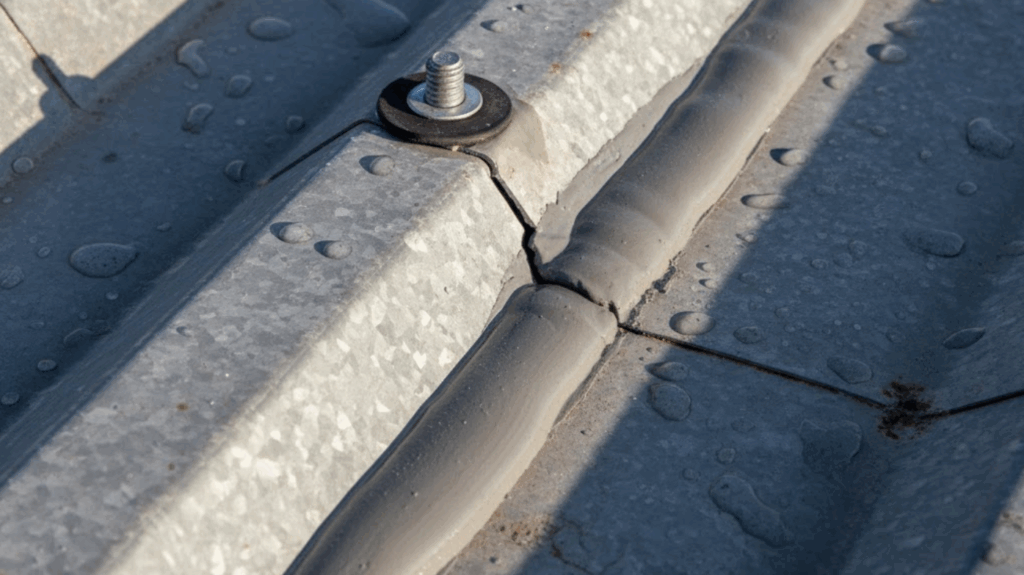
A roof repair isn’t finished until it’s watertight and visually consistent with the existing system. Clean, dry, and properly primed surfaces form the foundation for lasting adhesion. We take the time to remove dust, oils, and oxidation before applying primers or adhesives, trimming rough edges to prevent future stress points.
Not all sealants are created equal, which is why we match the product to the substrate—urethane or MS polymer sealants for metal, butyl sealant for laps, and system-specific adhesives for membranes. Reinforcement fabrics and tapes create flexible, watertight patches that can move with the roof during seasonal temperature swings.
Curing and weld times are carefully managed based on weather conditions. We plan work during dry windows and verify adhesion once everything sets. Afterward, we clean up the site, check all seams, and ensure water flows unobstructed. If the cracking or leaks stemmed from storm damage, our restoration specialists can return your property to its pre-loss condition.
Preventing Future Roof Cracks
The best repair is prevention. Good ventilation and temperature balance reduce thermal movement that causes cracking. We make sure attic spaces have proper intake and exhaust balance and that underlayments allow controlled expansion. For flat systems, proper slope and tapered insulation prevent ponding that accelerates surface fatigue.
Gutters and drains play a major role, too. When debris builds up and water can’t flow freely, pressure increases on seams and joints. Regular cleaning, especially after storms or heavy leaf fall, prevents cracks from forming at stress points. We also recommend scheduling spring and fall roof inspections to catch early wear and sealant fatigue before they turn into leaks. To learn more about maintenance and ongoing protection, explore our roofing service options.
When to Call a Professional
Even if you understand the basics of how to repair roof cracks, some jobs require specialized tools, safety measures, and certification to meet building codes and manufacturer warranties. Roofs with steep slopes, multiple stories, or electrical lines nearby pose real safety hazards. Cracks that return after patching, signs of structural movement, or widespread deterioration usually point to deeper issues that demand professional intervention.
When these warning signs appear, don’t wait for the next storm. Contact our DFW team for a full inspection and clear repair plan.
Conclusion

The smartest approach to roof crack repair is simple: address the problem early, identify the right materials and methods, and trust professionals who know your local climate. In DFW’s unpredictable weather, timely action can prevent interior damage, save money, and extend your roof’s lifespan.
At Alpine Roofing, we’re proud to be a trusted Fort Worth-based company serving the entire DFW Metroplex. Whether you need inspection, repair, or full restoration after a storm, we’re here with proven craftsmanship and clear communication every step of the way. Call us at +1 682-257-4631 or reach out online to schedule service today.
NAP: Alpine Roofing is located at 7247 Kentish Dr, Fort Worth, TX 76137. You can reach us at +1 682-257-4631 or by email at info@alpineroofingandsolar.com. For more information about our professional roofing services, visit our website to get started.
Frequently Asked Questions
What’s the most common cause of roof cracks in DFW?
Rapid temperature swings and hail are the biggest culprits. Heat causes materials to expand, and sudden cold snaps make them contract, leading to splits or surface checks over time.
Can a small roof crack really cause a leak?
Yes. Even a hairline crack can channel water under shingles or through seams, especially during heavy Texas rain. Left unsealed, it can damage decking and insulation.
How long does a roof crack repair take?
Most localized repairs can be completed in a few hours. Larger projects involving moisture removal or complex membrane work may take a full day, depending on conditions.
Will my insurance cover roof crack repairs after a storm?
If the cracks resulted from sudden storm damage like hail or wind, coverage is likely. It’s best to document the damage quickly and request a professional inspection before filing your claim.
How often should I schedule a roof inspection to prevent cracks?
Twice a year—typically in spring and fall—is ideal. Additional inspections after major storms can catch small issues early before they turn into leaks.