
Corrugated metal roofing is a reliable and versatile solution for residential and light commercial buildings in DFW. Alpine Roofing has installed and restored thousands of roofs across North Texas, providing firsthand insight into how these systems perform under the local climate. Corrugated panels offer a combination of long-term durability, a clean modern aesthetic, and minimal maintenance, making them a preferred choice for homeowners and commercial property managers alike.
Their lightweight design reduces structural load, which can be particularly beneficial for retrofitting older homes or commercial buildings. At Alpine Roofing, we design and install corrugated metal systems that comply with local building codes and withstand the heat, wind, and occasional hail that DFW experiences. This guide provides a comprehensive overview of corrugated metal roofing, including how it works, available profiles and finishes, installation requirements, maintenance, and how to hire a trusted contractor.
What Corrugated Metal Roofing Is and How It Works
Corrugated metal roofing consists of steel, aluminum, or copper panels with repeating ridges and valleys. The ribs provide stiffness, allowing panels to span distances without sagging and resist wind uplift, hail, and occasional foot traffic for maintenance. In DFW, panels are generally installed vertically from eave to ridge and secured with either exposed screws or concealed clips depending on the panel profile and desired appearance.
The corrugated design efficiently sheds water, directing it away from seams and penetrations. Combined with proper underlayment, flashing, and sealants, this creates a watertight system. Solid decking, typically plywood or OSB, provides stability, reduces noise, and ensures fasteners hold securely. Adequate intake and ridge ventilation also help manage attic heat, which is crucial in DFW’s warm summers and can prolong the life of the roofing system.
Panel Profiles and Gauges
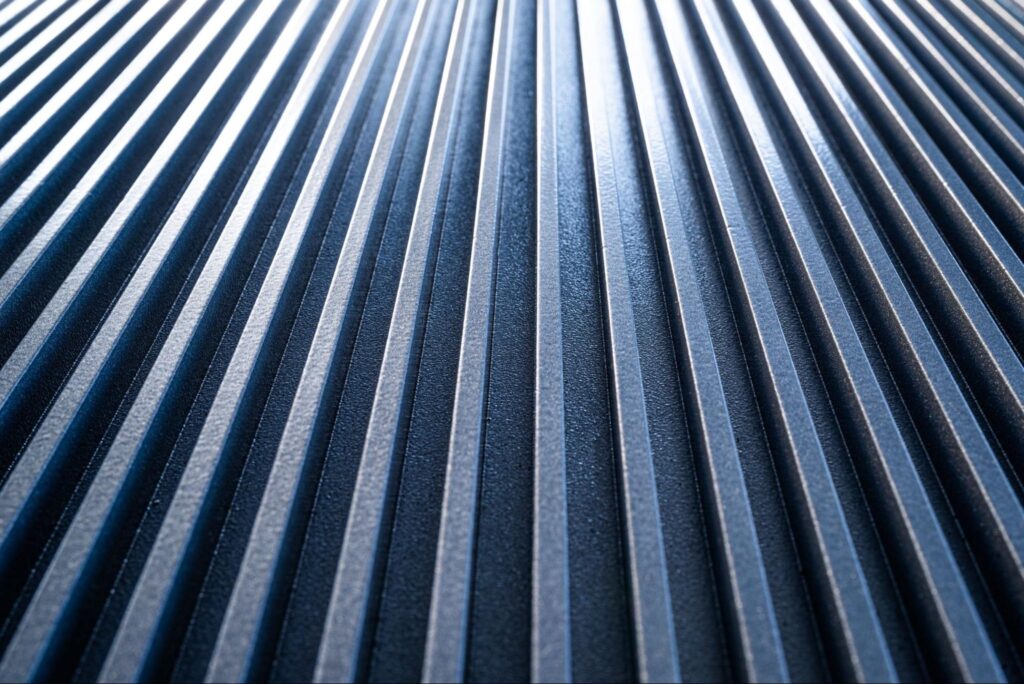
Corrugated panels are available in several profiles. Rounded ribs provide a classic aesthetic, while deeper structural corrugations increase strength and spanning capability, supporting roofs through heavy wind and hail events. Some commercial or industrial structures use r-panel profiles, which are recognized for durability and long-term performance.
Exposed-fastener panels are easier to install and allow simple maintenance, although screws and washers may need periodic inspection due to natural wear. Concealed-fastener panels hide screws for a clean look, enhance water tightness, and reduce long-term maintenance needs.
Metal type and gauge influence both the panel’s strength and its visual appearance. Galvanized steel and Galvalume are commonly used in DFW to resist corrosion from weather exposure, while aluminum may be chosen for lightweight applications. Gauge selection helps ensure the panels are resilient enough for local wind and hail conditions while maintaining proper attachment and performance.
Coatings and Finishes
Corrugated metal panels can be coated to enhance both durability and aesthetics. Galvanized and Galvalume coatings protect against corrosion, helping panels maintain structural integrity in DFW’s heat and humidity.
Painted finishes such as SMP or PVDF improve color retention and resist UV degradation, which helps roofs maintain appearance over time. Lighter color coatings reflect heat, supporting energy efficiency by reducing heat absorption into the attic. Panel textures, including smooth, matte, or wrinkle-matte finishes, reduce glare and help minimize visual imperfections like oil canning, improving the overall look of large roof sections.
Selection of coatings and finishes should consider both aesthetic preference and local climate conditions. Explore available options and schedule a roof assessment through our Roofing Services.
Pros and Cons for Homes and Light Commercial Buildings
Durability, Weather, and Energy Efficiency
Corrugated metal roofing is built to withstand DFW weather conditions. The panel design adds structural rigidity, helping the roof resist wind uplift and hail impact. Noncombustible metals provide an added layer of fire safety. Reflective finishes reduce heat absorption, assisting HVAC systems and improving overall building energy performance. Lightweight panels also decrease structural load, which can simplify roof retrofits or repairs.
Noise, Oil Canning, and Walkability
Rain noise is minimal with solid decking, proper underlayment, and insulation. Slight waviness, known as oil canning, is aesthetic and does not compromise the structural integrity of the roof. Panels are designed to be walked on safely by trained professionals for inspections or repairs, though homeowners should avoid stepping on wet or steep sections.
Schedule a consultation to discuss pros and cons for your property through our Roofing Services.
Installation Essentials and Roof Requirements

Slope and Substrate
Corrugated panels require a minimum slope to ensure water drains properly. Deeper rib profiles and concealed-fastener designs can handle slightly lower slopes, while extremely low slopes may require alternative systems like standing seam. Residential roofs typically use solid decking (plywood or OSB), while some commercial buildings may utilize purlins for structural support. Alpine Roofing evaluates framing, edge reinforcement, and fastener pull-out strength to ensure the roof complies with local codes and can withstand DFW wind conditions.
Underlayment, Flashings, and Ventilation
Synthetic underlayments are used to improve tear resistance, durability, and thermal performance. Flashings for ridges, eaves, valleys, and roof penetrations are installed with sealants or tape to maintain water tightness. Balanced intake and exhaust ventilation is essential to prevent heat and moisture buildup, which can damage panels and reduce longevity.
Start with a professional inspection through our Roofing Services.
Costs, Lifespan, and Warranty Considerations
Corrugated metal roofing costs vary depending on roof complexity, panel type, coating, fastener system, and ventilation requirements. Every property is unique, so Alpine Roofing provides detailed on-site estimates that outline all materials and labor, giving a clear understanding of the investment.
When properly installed and maintained, corrugated metal roofs last for decades. PVDF-coated panels maintain color and appearance over time, and Galvalume panels resist corrosion under DFW conditions. Workmanship warranties protect the quality of installation, giving homeowners confidence in their roof’s long-term performance.
Maintenance, Repairs, and Restoration
Regular inspections help maintain roof integrity. Check panel laps, fasteners, flashings, and ridge vents annually. Exposed screws may require retightening or replacement due to thermal expansion or weather exposure. Recoating and resealing extend the life of panels and maintain water tightness.
Alpine Roofing provides 24/7 support for storm damage, hail, or wind events through our Restoration Services. The team can assess damage, coordinate with insurance adjusters, and restore the roof to its original condition.
Schedule maintenance or storm service through our Roofing Services.
Hiring a Roofing Contractor

Selecting a certified, insured, and bonded contractor ensures the roof meets DFW building codes and manufacturer specifications. Alpine Roofing provides on-site assessments, guidance on material selection, and detailed project scopes. Safety protocols, permits, insurance compliance, and clear project timelines are all included to protect your property and investment.
Compare bids and request a professional proposal through Contact Us.
Conclusion
Corrugated metal roofing provides strength, durability, and modern appeal for homes and commercial buildings in DFW. Proper installation, regular maintenance, and engineering aligned with local codes ensure roofs perform reliably against heat, hail, and wind. Alpine Roofing guides clients through profile and finish selection to deliver a roof that meets both functional and aesthetic goals.
We are located at 7247 Kentish Dr, Fort Worth, TX 76137. Call +1 682-257-4631 or email info@alpineroofingandsolar.com. Book your inspection today through our Contact Us page.
Corrugated Metal Roofing FAQs
What is corrugated metal roofing and how does it work?
Corrugated metal roofing uses panels with repeating ribs that increase strength and help shed water quickly. The corrugated design channels rain and runoff efficiently, reducing the risk of leaks at seams and penetrations. Panels are typically made from Galvalume or coated steel, providing corrosion resistance and long-term durability suitable for DFW’s heat, sun, and occasional hail. Proper installation with flashing, underlayment, and secure fasteners ensures the system performs reliably for decades.
Is it loud during rain or hail?
With solid decking, synthetic underlayment, and insulation, most homeowners find corrugated metal surprisingly quiet, even during heavy rain or hail. Noise transmission is minimized, making it comparable to other roofing types. Open purlin systems or improperly insulated panels may allow more sound to carry, which is why proper substrate and underlayment selection is important for comfort.
What roof pitch and substrate are needed?
The minimum roof slope depends on the panel profile. Deeper rib profiles and concealed-fastener systems can accommodate slightly lower slopes, while shallow profiles require standard or steeper slopes for proper water drainage. For DFW residential roofs, solid decking such as plywood or OSB is standard. The decking provides a stable attachment surface for panels, reduces noise, and supports proper installation of underlayment and flashings.
How much does it cost?
Corrugated metal roofing costs vary depending on roof complexity, materials, fastener type, and code requirements. Factors like multiple roof planes, penetrations, or structural modifications can affect labor and material needs. On-site estimates provide the most accurate guidance, allowing homeowners to understand the scope of investment and make informed decisions.
Corrugated versus standing seam, which should I choose?
Corrugated panels offer a cost-effective, durable option with a classic appearance. They are easier to install and maintain but may require periodic inspection of exposed fasteners. Standing seam panels use concealed fasteners and interlocking seams for superior water tightness and a cleaner look. Choice between the two depends on roof slope, maintenance preferences, aesthetic goals, and long-term durability considerations for DFW weather.
Can it be installed over shingles?
Corrugated metal can sometimes be installed over existing shingles, provided the underlying decking is in good condition and proper ventilation is maintained. Removing old shingles is often recommended to allow a full inspection of the roof structure, ensure proper flashing, and maximize long-term performance. Following manufacturer guidelines and local building codes ensures the warranty remains valid and the system performs reliably.